
You already made
the diagnosis.
Keep the treatment.
Shockwave has been part of equine sports medicine for more than twenty years. The question in your practice is not whether it works — it is who owns the treatment, and who keeps the case.
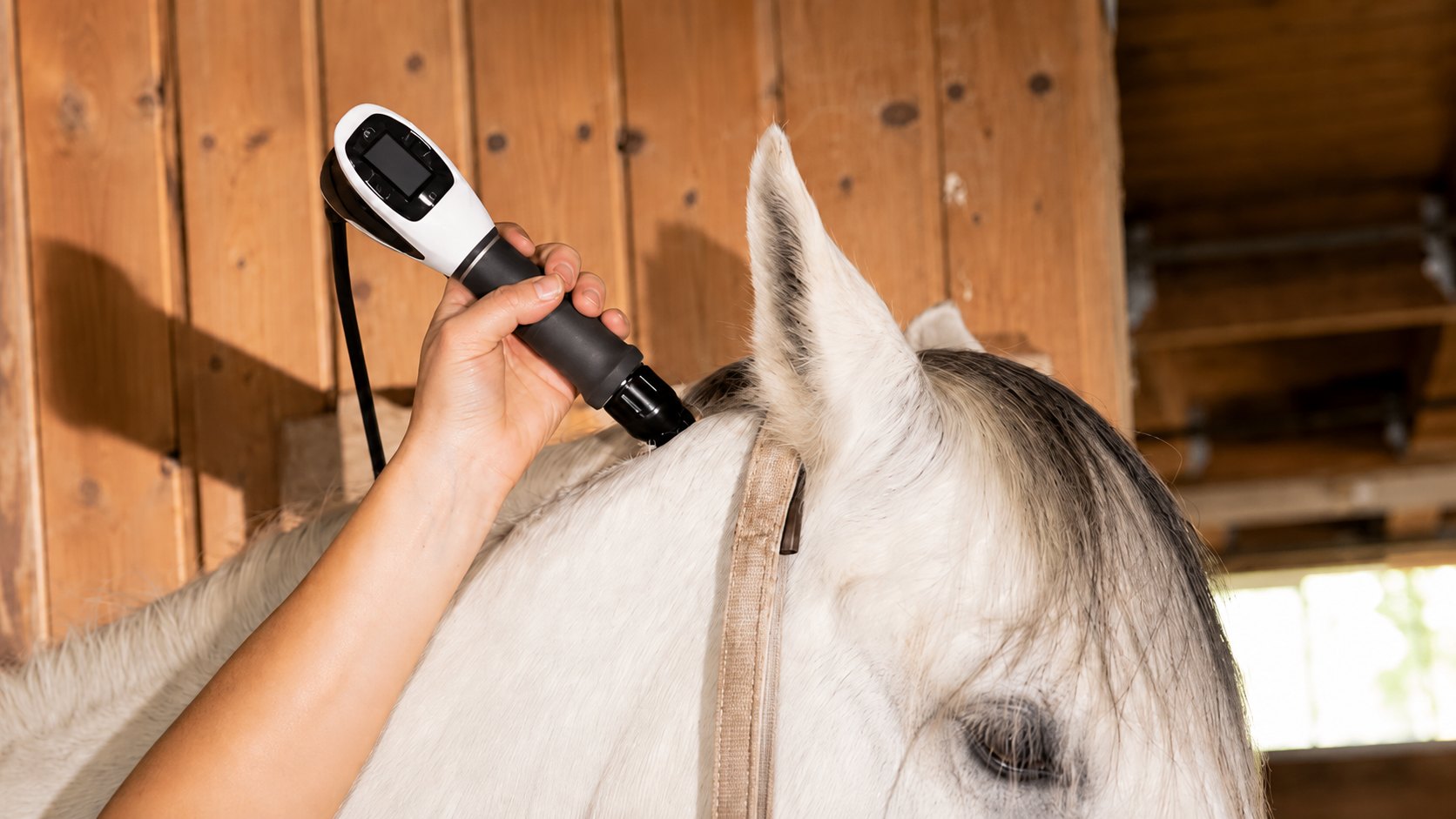
Equine Treatment
What leaves with the treatment.
When the therapy is referred out, or arranged by the trainer with a third party, more than the fee goes with it.
The Treatment
The fee and the margin leave your practice entirely, on a case you blocked, imaged and diagnosed.
The Rechecks
Follow-up ultrasound and re-evaluation follow whoever delivered the therapy. So does the next case from that barn.
Case Control
Energy, region, session count and timing get decided by somebody who did not perform the lameness workup.
The Documentation
Withdrawal-time compliance becomes someone else’s record — until something goes wrong at a show.
Commonly treated.
Tendon & ligament
- Proximal suspensory desmitis — fore and hind
- Suspensory branch and body lesions
- Superficial and deep digital flexor tendonitis
- Enthesopathies, splints and stress remodelling
Axial, joint & foot
- Thoracolumbar pain and dorsal spinous process impingement
- Distal tarsal (lower hock) osteoarthritis
- Podotrochlear / navicular region pain
- Chronic wounds and slow-healing granulation beds
Withdrawal times and who may administer.
No competitor puts this on a website. Your clients will notice that you did.
- USEF · GR414
- Only a licensed veterinarian may administer on competition grounds. No treatment within 12 hours of competing, and none within the 3 days preceding competition except by a licensed veterinarian no closer than 12 hours out, limited to back, neck and dorsal pelvis — with a Drugs and Medications Report Form filed before the horse competes.
- FEI
- Prohibits treatment within five days of competition. Confirm against current FEI veterinary regulations for the discipline.
- AAEP
- Recommends a minimum 72-hour withdrawal, administration by a licensed veterinarian with a valid VCPR, or by a licensed technician under direct veterinary supervision.
- Racing
- A separate regime. Machines must be registered with the state racing commission, administration is limited to licensed veterinarians, treatment is reportable within 48 hours, and a treated horse goes on the Veterinarians’ List — no racing for 30 days.
Rules change between seasons. Verify the current governing rulebook for the client’s discipline before every treatment — training covers the workflow for doing so.
The economics of the farm call, not the box.
Equine ambulatory revenue is constrained by windshield time. The most valuable service you can add is one that produces more billable work per stop without adding another trip.
The Second Horse Is The Margin
The drive is already paid for by the first appointment. Every additional horse treated on the same call carries almost no incremental cost.
You Set The Fee
Treatment is billed per region per session, at a fee you set, alongside the exam and imaging you were already charging for.
Delivery Under Supervision
At the farm and in the clinic, a licensed technician may deliver under direct veterinary supervision where your state practice act allows.
OrthoWave makes no representation about revenue. Any figures discussed are illustrative arithmetic based on a fee your practice sets independently.
Read the equine guide before you call.
Eight pages on indications, ambulatory economics, withdrawal times and the client-acquisition program.
(877) 678-4605 · Monday to Friday, 9am–5pm ET